Dye optimized for superior cell-permeability and retention
Economical alternative developed for use with conventional dual-dispensing microplate readers, i.e. BioTek, BMG Labtech, etcetera.
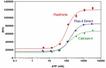
Provides EC50 values comparable to Fluo-4 and Calcium 4
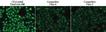
2-fold brighter fluorescence vs. Fluo-4
Sensitive dye provides larger assay window allowing for detection of even weak signal compound responses
Better able to detect native levels of GPCR expression in cultured cells
Data suitable for comparison with that obtained using alternative dyes
Fluo-Forte® Calcium Assay Kits detect mobilization of intracellular calcium utilizing a fluorogenic calcium-binding dye optimized for superior cell-permeability and retention. The self-quenching dye undergoes an electronic change upon binding of calcium, resulting in a several order of magnitude greater fluorescence.
Mechanism of Action
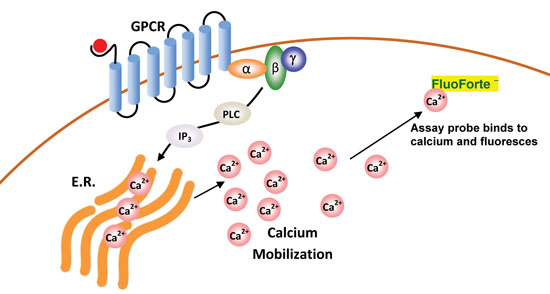
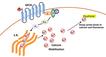
The fluorogenic calcium-binding dye is provided to the cells as an acetoxymethyl (AM) ester, which is cell-permeable. Once inside the cells, the dye is hydrolyzed by intracellular esterases, which leads to generation of a cell membrane impermeable negatively charged form. In the absence of calcium, the calcium-binding moiety portion of the probe quenches the fluorescence of the fluorophore portion of the probe by photo-induced electron transfer. Binding of calcium relieves quenching and results in a several order of magnitude increase in the fluorescence emission intensity, with no shift in wavelength. The dye is capable of binding to physiologically relevant levels of calcium and increases in intracellular calcium lead to an increased fluorescence signal, which is readily measurable.
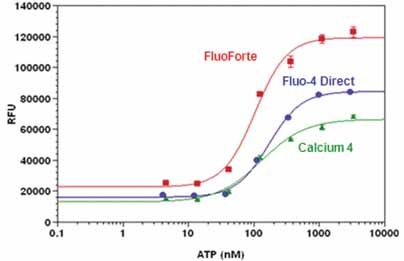
Obtain robust signal intensity. ATP dose response curves in CHO-M1 cells, expressing P2Y endogenous receptors. CHO cells were seeded overnight at 40,000 cells per 100 µl per well in a 96-well black wall/clear bottom microplate. The cells were incubated with 100 µl of Life Technologies’ Fluo-4 Direct™ kit, Molecular Devices’ Calcium 4 kit (both based upon manufacturer’s protocol) or FLUOFORTE® dye. ATP (20µl/well) was added by FlexStation to achieve the final indicated concentrations. Comparable ATP EC50 values were obtained using all three dyes, while FLUOFORTE® generated the highest intensity signal.
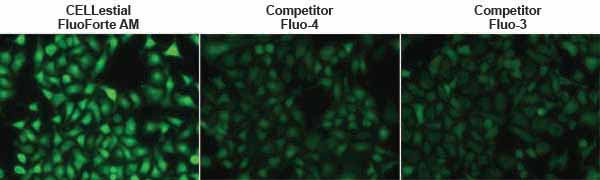
FLUOFORTE® exhibits significantly brighter fluorescence intensity than Fluo-4 AM and Fluo-3 AM. Evaluation of relative dye fluorescence. U2OS cells were seeded overnight, growth medium was removed, and cells were incubated with 100 µl of FLUOFORTE® AM, Fluo-3 AM, or Fluo-4 AM in HHBS at 37 °C, 5% CO2 incubator for 1 hour. The cells were washed twice with 200 µl HHBS, and ATP (20 µL/well) was added to achieve concentrations of 200 nM with dye efflux inhibitor. Cells were then immediately imaged with a fluorescence microscope (Olympus IX71) using FITC channel.
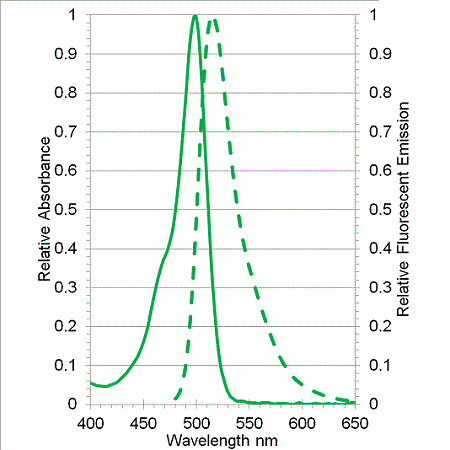
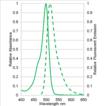
Excitation (solid line) and emission (dotted line) spectra of FLUOFORTE® dye.
FLUOFORTE® dye increases in fluorescent intensity when bound to calcium.
Provides a homogeneous fluorescence-based assay for detecting intracellular calcium mobilization across a broad spectrum of biological targets
Quality Control:
% purity of Reagent A (FLUOFORTE® dye) by HPLC is ≥95%.
Quantity:
For 100 x 96-well plates
Handling:
Protect from light. Avoid freeze/thaw cycles.
Shipping:
Dry Ice
Short Term Storage:
-20°C
Long Term Storage:
-80°C
Contents:
Reagent A (lyophilized FLUOFORTE® dye), 10 vials Reagent B (dye efflux inhibitor), 10 x 10 ml
Technical Info/Product Notes:
Measurement of transient calcium mobilization from intracellular stores in response to the activation of G protein-coupled receptors (GPCRs) is considered a standard approach to the pharmacological characterization of receptors and compounds, frequently implemented in primary screening and lead development programs.
The FLUOFORTE® Calcium Assay Kit is a member of the CELLESTIAL® product line, reagents and assay kits comprising fluorescent molecular probes that have been extensively benchmarked for live cell analysis applications.
Regulatory Status:
RUO - Research Use Only
Product Literature References
A Novel Multi-Target Mu/Delta Opioid Receptor Agonist, HAGD, Produced Potent Peripheral Antinociception with Limited Side Effects in Mice and Minimal Impact on Human Sperm Motility In Vitro: F. Li, et al.; Molecules 28, 427 (2023), Abstract;
UR-144, synthetic cannabinoid receptor agonist, induced cardiomyoblast toxicity mechanism comprises cytoplasmic Ca2+ and DAPK1 related autophagy and necrosis: M. Akar, et al.; Toxicol. Mech. Methods 33, 56 (2023), Abstract;
Ghrelin Represses Thymic Stromal Lymphopoietin Gene Expression through Activation of Glucocorticoid Receptor and Protein Kinase C Delta in Inflamed Skin Keratinocytes: H. Jeong, et al.; Int. J. Mol. Sci. 23, 3977 (2022), Abstract;
Mechanisms underlying citrinin-induced toxicity via oxidative stress and apoptosis-mediated by mitochondrial-dependent pathway in SH-SY5Y cells: M. Abudayyak, et al.; Drug Chem. Toxicol. 10.1080, 01480545 (2022), Abstract;
The allergy mediator histamine confers resistanceto immunotherapy in cancer patients via activationof the macrophage histamine receptor H1: H. Li, et al.; Cancer Cell 40, 36 (2022), Abstract;
A calcium fluorescence assay for quantification of cholinergic receptor activity of clinical drugs in serum - comparison with radioactive methods: J.N. Nobrega, et al.; J. Pharmacol. Toxicol. Methods 112, 107118 (2021), Abstract;
Cellular Stress Pathways Are Linked to Acetamiprid-Induced Apoptosis in SH-SY5Y Neural Cells: E. Öztas, et al.; Biology 10, 820 (2021), Abstract;
Fenofibrate, a PPARα agonist, reduces hepatic fat accumulation through the upregulation of TFEB-mediated lipophagy: J. Yoo, et al.; Metabolism 120, 154798 (2021), Abstract;
Functional evidence for biased inhibition of G protein signaling by YM-254890 in human coronary artery endothelial cells: Q. Peng, et al.; Eur. J. Pharmacol. 591, 173706 (2021), Application(s): Intracellular Ca2+ mobilization assay on Human coronary artery endothelial cells (HCAEC), Abstract;
Perfluorooctane sulfonate and bisphenol A induce a similar level of mast cell activation via a common signaling pathway, Fyn-Lyn-Syk activation: S.J. Park, et al.; Food Chem. Toxicol. 156, 112478 (2021), Abstract;
Phorbol myristate acetate induces differentiation of THP-1 cells in a nitric oxide-dependent manner: Y.Y. Chang, et al.; Nitric Oxide 109, 33 (2021), Abstract;
Stromal Cell-Derived Factor 1 Regulates in Vitro Sperm Migration Towards the Cumulus-Oocyte Complex in Cattle: K. Umezu, et al.; PLoS One 15, e0232536 (2020), Abstract; Full Text
Exercise Prevents Memory Consolidation Defects Via Enhancing Prolactin Responsiveness of CA1 Neurons in Mice Under Chronic Stress: Y.H. Leem, et al.; Mol. Neurobiol. 56, 6609 (2019), Abstract;
Inhibitory effect of taxifolin on mast cell activation and mast cell-mediated allergic inflammatory response: S. Pan, et al.; Int. Immunopharmacol. 71, 205 (2019), Abstract;
Magnesium sulfate inhibits binding of lipopolysaccharide to THP-1 cells by reducing expression of cluster of differentiation 14: Y.Y. Chang, et al.; Inflammopharmacology 27, 249 (2019), Abstract;
Recruitment of CD103+ dendritic cells via tumor-targeted chemokine delivery enhances efficacy of checkpoint inhibitor immunotherapy: J.M. Williford, et al.; Sci. Adv. 5, eaay1357 (2019), Abstract; Full Text
Alisol B 23-Acetate Inhibits IgE/Ag-Mediated Mast Cell Activation and Allergic Reaction: C. Shao, et al.; Int. J. Mol. Sci. 19, E4092 (2018), Abstract; Full Text
Apigenin and Luteolin Attenuate the Breaching of MDA-MB231 Breast Cancer Spheroids Through the Lymph Endothelial Barrier in Vitro: J. Hong, et al.; Front. Pharmacol. 9, 220 (2018), Abstract; Full Text
Breast Cancer Targeting through Inhibition of the Endoplasmic Reticulum-Based Apoptosis Regulator Nrh/BCL2L10: A. Nougarede, et al.; Cancer Res. 78, 1404 (2018), Abstract;
CCR5/CCL5 axis interaction promotes migratory and invasiveness of pancreatic cancer cells: S.K. Singh, et al.; Sci. Rep. 8, 1323 (2018), Abstract; Full Text
Dysregulation of the calcium handling protein, CCDC47, is associated with diabetic cardiomyopathy: K. Thapa, et al.; Cell Biosci. 8, 45 (2018), Abstract; Full Text
Ectopic expression of OX1R in ulcerative colitis mediates anti-inflammatory effect of orexin-A: N. Messal, et al.; Biochim. Biophys. Acta Mol. Basis Dis. 1864, 3618 (2018), Abstract;
Effects of MgSO4 on inhibiting Nod-like receptor protein 3 inflammasome involve decreasing intracellular calcium: Y.Y. Chang, et al.; J. Surg. Res. 221, 257 (2018), Abstract;
Endogenous CHRNA7-ligand SLURP1 as a potential tumor suppressor and anti-nicotinic factor in pancreatic cancer: V.M. Throm, et al.; Oncotarget 9, 11734 (2018), Abstract; Full Text
Endothelial cell-derived GABA signaling modulates neuronal migration and postnatal behavior: S. Li, et al.; Cell Res. 28, 221 (2018), Abstract; Full Text
In vitro, in vivo and ex vivo demonstration of the antitumoral role of hypocretin-1/orexin-A and almorexant in pancreatic ductal adenocarcinoma: S. Dayot, et al.; Oncotarget 9, 6952 (2018), Abstract; Full Text
Melatonin Balance the Autophagy and Apoptosis by Regulating UCP2 in the LPS-Induced Cardiomyopathy: P. Pan, et al.; Molecules 16, 23 (2018), Abstract; Full Text
Spinacetin Suppresses the Mast Cell Activation and Passive Cutaneous Anaphylaxis in Mouse Model: N. Ji, et al.; Front. Pharmacol. 9, 824 (2018), Abstract; Full Text
Tanshinone IIA suppresses FcεRI-mediated mast cell signaling and anaphylaxis by activation of the Sirt1/LKB1/AMPK pathway: X. Li, et al.; Biochem. Pharmacol. 152, 362 (2018), Abstract;
Targeting of Rac1 prevents bronchoconstriction and airway hyperresponsiveness: G. Andre-Gregoire, et al.; J. Allergy Clin. Immunol. 142, 824 (2018), Abstract;
Colon cancer cell-derived 12(S)-HETE induces the retraction of cancer-associated fibroblast via MLC2, RHO/ROCK and Ca2+ signalling: S. Stadler, et al.; Cell. Mol. Life Sci. 74, 1907 (2017), Abstract; Full Text
LAT is essential for the mast cell stabilising effect of tHGA in IgE-mediated mast cell activation: J.W. Tan, et al.; Biochem. Pharmacol. 144, 132 (2017), Abstract;
MHC Class II Activation and Interferon-γ Mediate the Inhibition of Neutrophils and Eosinophils by Staphylococcal Enterotoxin Type A (SEA): A.P. Ferreira-Duarte, et al.; Front. Cell. Infect. Microbiol. 7, 518 (2017), Abstract; Full Text
Mitofusin-2 mediated mitochondrial Ca2+ uptake 1/2 induced liver injury in rat remote ischemic perconditioning liver transplantation and alpha mouse liver-12 hypoxia cell line models: R.P. Liang, et al.; World J. Gastroenterol. 23, 6995 (2017), Abstract; Full Text
Persistent kallikrein 5 activation induces atopic dermatitis-like skin architecture independent of PAR2 activity: Y. Zhu, et al.; J. Allergy Clin. Immunol. 140, 1310 (2017), Abstract;
2(S)-HETE increases intracellular Ca2+ in lymph-endothelial cells disrupting their barrier function in vitro; stabilization by clinical drugs impairing calcium supply: C.H. Nguyen, et al.; Cancer Lett. 380, 174 (2016), Abstract;
NecroX‐5 suppresses IgE/Ag‐stimulated anaphylaxis and mast cell activation by regulating the SHP‐1‐Syk signaling module: X. Li, et al.; Allergy. 71, 198 (2016), Abstract;
Simultaneous Activation of Induced Heterodimerization between CXCR4 Chemokine Receptor and Cannabinoid Receptor 2 (CB2) Reveal a Mechanism for Regulation of Tumor Progression: C.J. Coke, et al.; J. Biol. Chem. 291, 9991 (2016), Application(s): Calcium (Ca2+)-mobilization assay, Abstract; Full Text
WIF1 re-expression in glioblastoma inhibits migration through attenuation of non-canonical WNT signaling by downregulating the lncRNA MALAT1: I. Vassallo, et al.; Oncogene 35, 12 (2016), Application(s): Assay for microplates, Abstract;
15,16-Dihydrotanshinone I suppresses IgE-Ag stimulated mouse bone marrow-derived mast cell activation by inhibiting Syk kinase: X. Li, et al.; J. Ethnopharmacol. 169, 138 (2015), Application(s): Fluorometric Imaging, Abstract;
ASM-024, a piperazinium compound, promotes the in vitro relaxation of β2-adrenoreceptor desensitized tracheas: E. Israël-Assayag, et al.; PLoS One. 10, e0120095 (2015), Application(s): Microplate reader using human bronchial smooth muscle cells (HBSMC), Abstract; Full Text
Enhanced Ca2+ response and stimulation of prostaglandin release by the bradykinin B2 receptor in human retinal pigment epithelial cells primed with proinflammatory cytokines: R. Catalioto, et al.; Biochem. Pharmacol. 97, 189 (2015), Application(s): Determination of intracellular calcium in human cells, Abstract;
Fluorescence/luminescence-based markers for the assessment of Schistosoma mansoni schistosomula drug assays: G. Panic, et al.; Parasit. Vectors. 8, 624 (2015), Application(s): Microplate reader using newly transformed Schistosomula, Abstract; Full Text
Neuroprotective and neuroregenerative effects of nimodipine in a model system of neuronal differentiation and neurite outgrowth: K. Bork, et al.; Molecules 20, 1003 (2015), Abstract; Full Text
NF-κB contributes to MMP1 expression in breast cancer spheroids causing paracrine PAR1 activation and disintegrations in the lymph endothelial barrier in vitro: C.H. Nguyen, et al.; Oncotarget. 6, 39262 (2015), Application(s): Microplate reader using lymph endothelial cells (LEC), Abstract; Full Text
Supplemental Online Information: Dual Optical Recordings for Action Potentials and Calcium Handling in Induced Pluripotent Stem Cell Models of Cardiac Arrhythmias Using Genetically Encoded Fluorescent Indicators: L. Song, et al.; Stem Cells Transl. Med. 4, 468 (2015), Application(s): Confocal Microscopy, Abstract;
Low anticoagulant heparin blocks thrombin-induced endothelial permeability in a PAR-dependent manner: J.N. Gonzales, et al.; Vascul. Pharmacol. 62, 63 (2014), Application(s): Microplate reader using human pulmonary artery endothelial cells (HPAEC), Abstract; Full Text
Protein kinase CK2 inhibition induces cell death via early impact on mitochondrial function: F. Qaiser, et al.; J. Cell. Biochem. 115, 2103 (2014), Application(s): Microplate reader using PC3-LN4 cells, Abstract; Full Text
Adipokinetic hormone exerts its anti-oxidative effects using a conserved signal-transduction mechanism involving both PKC and cAMP by mobilizing extra- and intracellular Ca2+ stores: A. Bednarova, et al.; Comp. Biochem. Physiol. C Toxicol. Pharmacol. 158, 142 (2013), Abstract;
Characterization of a novel proinflammatory effect mediated by BK and the kinin B 2 receptor in human preadipocytes: R.M. Catalioto, et al.; Biochem. Pharmacol. 86, 508 (2013), Abstract;
Cysteine (C)-X-C Receptor 4 Undergoes Transportin 1-Dependent Nuclear Localization and Remains Functional at the Nucleus of Metastatic Prostate Cancer Cells: A.S. Don-Salu-Hewage, et al.; PLoS One 8, e57194 (2013), Abstract; Full Text
Identification and functional studies of a new Nrf2 partner IQGAP1: a critical role in the stability and transactivation of Nrf2: J.H. Kim, et al.; Antioxid. Redox Signal. 19, 89 (2013), Application(s): Fluorescence microscopy on HeLa cells, Abstract; Full Text
In Type 1 Diabetes a Subset of Anti-Coxsackievirus B4 Antibodies Recognize Autoantigens and Induce Apoptosis of Pancreatic Beta Cells: C. Bason, et al.; PLoS One 8, e57729 (2013), Application(s): Intracellular Ca++ levels in beta cells upon Ca-channel activation, Abstract; Full Text
Inula japonica extract inhibits mast cell-mediated allergic reaction and mast cell activation: Y. Lu, et al.; J. Ethnopharmacol. 143, 151 (2012), Application(s): Calcium levels in mouse bone marrow-derived mast cells, Abstract;
Leukotriene C4 induces migration of human monocyte-derived dendritic cells without loss of immunostimulatory function: J. Dannull, et al.; Blood 119, 3113 (2012), Application(s): Intracellular calcium release in human monocyte derived dendritic cells with Tecan Infinite plate reader, Abstract; Full Text
Natural vanadium-containing Jeju groundwater inhibits immunoglobulin E-mediated anaphylactic reaction and suppresses eicosanoid generation and degranulation in bone marrow derived-mast cells: X. Li, et al.; Biol. Pharm. Bull. 35, 216 (2012), Application(s): Calcium levels in mouse bone marrow-derived mast cells, Abstract; Full Text
Saucerneol D inhibits eicosanoid generation and degranulation through suppression of Syk kinase in mast cells: Y. Lu, et al.; Food Chem. Toxicol. 50, 4382 (2012), Application(s): Calcium levels in mouse bone marrow-derived mast cells, Abstract;
Amplification of cancer cell apoptosis in photodynamic therapy-treated tumors by adjuvant ceramide analog LCL29: M. Korbelik, et al.; Lasers Surg. Med. 43, 614 (2011), Application(s): Calcium levels in mouse squamous cell carcinoma, Abstract;
FLIM FRET technology for drug discovery: automated multiwell-plate high-content analysis, multiplexed readouts and application in situ: S. Kumar, et al.; Chemphyschem. 12, 609 (2011), Application(s): Use with HEK293 cells, Abstract; Full Text
Regulatory T cells from IL-10-deficient mice fail to suppress contact hypersensitivity reactions due to lack of adenosine production: S. Ring, et al.; J. Invest. Dermatol. 131, 1494 (2011), Abstract;
The P2Y(2) nucleotide receptor mediates tissue factor expression in human coronary artery endothelial cells: L. Ding, et al.; J. Biol. Chem. 286, 27027 (2011), Application(s): Calcium levels in human coronary artery endothelial cells, Abstract; Full Text
General Literature References
High throughput assay technologies for ion channel drug discovery: W. Zheng, et al.; Assay Drug Dev. Technol. 2, 543 (2004), Abstract;
Novel fluo-4 analogs for fluorescent calcium measurements: V.V. Martin, et al.; Cell Calcium 36, 509 (2004), Abstract;
Signalling specificity in GPCR-dependent Ca2+ signalling: K. Kiselyov, et al.; Cell Signal. 15, 243 (2003), Abstract;
Flow cytometric kinetic assay of calcium mobilization in whole blood platelets using Fluo-3 and CD41: M. do Ceu Monteiro, et al.; Cytometry 35, 302 (1999), Abstract;
Loading and localization of Fluo-3 and Fluo-3/AM calcium indicators in sinapis alba root tissue: A. Tretyn, et al.; Folia Histochem. Cytobiol. 35, 41 (1997), Abstract;
Nucleoplasmic and cytoplasmic differences in the fluorescence properties of the calcium indicator Fluo-3: C. Perez-Terzic, et al.; Cell Calcium 21, 275 (1997), Abstract;