Replaces Prod. #: ALX-350-260
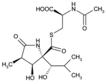
A potent and selective irreversible proteasome inhibitor. Specifically inhibits 20S proteasome (MCP; multicatalytic complex). Blocks proteasome activity by targeting the catalytic β-subunit. Has no effect on serine or cysteine proteases. Induces apoptosis inhuman monoblast U937 cells. Inhibits NF-κB activation by inhibiting IκB degradation (IC50=10 µM). Inhibits the ubiquitin proteasome pathway in cell culture. Inhibits cathepsin A. Upregulates HSP70 and HSP22, suggesting an initial neuroprotective pathway. Induces neurite outgrowth in Neuro 2A mouse neuroblastoma cells.
Product Details
| Formula: | C15H24N2O7S |
| |
| MW: | 376.4 |
| |
| Source: | Synthetic |
| |
| CAS: | 133343-34-7 |
| |
| Purity: | ≥97% (HPLC) |
| |
| Identity: | Determined by 1H-NMR and MS. |
| |
| Appearance: | White to off-white solid. |
| |
| Solubility: | Soluble in water (10mg/ml), 100% ethanol (1mg/ml), methanol, DMSO (20mg/ml), dimethyl formamide (20mg/ml) or acetonitrile (20mg/ml). |
| |
| Shipping: | Ambient Temperature |
| |
| Long Term Storage: | -20°C |
| |
| Use/Stability: | Organic stock solutions are stable for 3 months when stored at -20°C. Subject to hydrolysis in aqueous buffers. We do not recommend storing aqueous solutons for more than one day. |
| |
| Handling: | Protect from light. Avoid freeze/thaw cycles. |
| |
| Regulatory Status: | RUO - Research Use Only |
| |
Please mouse over
Product Literature References
Regional and age-dependent changes in ubiquitination in cellular and mouse models of spinocerebellar ataxia type 3: H. Luo, et al.; Front. Mol. Neurosci.
16, 1154203 (2023),
Abstract;
Chaperone-mediated autophagy regulates adipocyte differentiation: S. Kaushik, et al.; Sci. Adv.
8, eabq2733 (2022),
Abstract;
EDEM1 Regulates Amyloid Precursor Protein (APP) Metabolism and Amyloid-β Production: J. Nowakowska-Gołacka, et al.; Int. J. Mol. Sci.
23, 117 (2022),
Abstract;
KPNB1 modulates the Machado–Joseph disease protein ataxin-3 through activation of the mitochondrial protease CLPP: M. Abeditashi, et al.; Cell. Mol. Life Sci.
79, 401 (2022),
Abstract;
Lucanthone, Autophagy Inhibitor, Enhances the Apoptotic Effects of TRAIL through miR-216a-5p-Mediated DR5 Upregulation and DUB3-Mediated Mcl-1 Downregulation: J.Y. Yoon, et al.; Int. J. Mol. Sci.
23, 17 (2022),
Abstract;
Supplementation with uric and ascorbic acid protects stored red blood cells through enhancement of non-enzymatic antioxidant activity and metabolic rewiring: V.L. Tzounakas, et al.; Redox Biol.
57, 102477 (2022),
Abstract;
Red Blood Cell Proteasome in Beta-Thalassemia Trait: Topology of Activity and Networking in Blood Bank Conditions: A.T. Anastasiadi, et al.; Membranes
11, 716 (2021),
Abstract;
Males and Females Differ in the Subcellular and Brain Region Dependent Regulation of Proteasome Activity by CaMKII and Protein Kinase A: R.K. Devulapalli, et al.; Neuroscience
418, 1 (2019),
Abstract;
A leptospiral AAA+ chaperone-Ntn peptidase complex, HslUV, contributes to the intracellular survival of Leptospira interrogans in hosts and the transmission of leptospirosis: S.L. Dong, et al.; Emerg. Microbes Infect.
6, e105 (2017),
Abstract;
Full Text
Functional analysis of Brassica napus phloem protein and ribonucleoprotein complexes: A. Ostendorp, et al.; New Phytol.
214, 1188 (2017),
Application(s): Proteasome inhibition in phloem sap,
Abstract;
Full Text
Comparative Proteomics Reveals Strain-Specific β-TrCP Degradation via Rotavirus NSP1 Hijacking a Host Cullin-3-Rbx1 Complex: S. Ding, et al.; PLoS Pathology
12, e1005929 (2016),
Application(s): Cell treatment for immunoprecipitation,
Abstract;
Full Text
The Molecular Chaperone Hsp70 Promotes the Proteolytic Removal of Oxidatively Damaged Proteins by the Proteasome: S. Reeg, et al.; Free Radic. Biol. Med.
99, 153 (2016),
Application(s): Immunoblot Analysis,
Abstract;
Associated Degeneration of Ventral Tegmental Area Dopaminergic Neurons in the Rat Nigrostriatal Lactacystin Model of Parkinsonism and their Neuroprotection by Valproate: I.F. Harrison, et al.; Neurosci. Lett.
614, 16 (2015),
Application(s): Stereotaxic lesioning of the SNpc,
Abstract;
Insertion of exogenous epitopes in the E3-19K of oncolytic adenoviruses to enhance TAP-independent presentation and immunogenicity: A. Rodríguez-García, et al.; Gene Ther.
22, 596 (2015),
Application(s): Cell Injection,
Abstract;
Monocyte-Induced Prostate Cancer Cell Invasion is Mediated by Chemokine ligand 2 and Nuclear Factor-κB Activity: P.F. Lindholm, et al.; J. Clin. Cell. Immunol.
6, 308 (2015),
Application(s): Cell Culture,
Abstract;
Full Text
Neurorestoration induced by the HDAC inhibitor sodium valproate in the lactacystin model of Parkinson's is associated with histone acetylation and up-regulation of neurotrophic factors: I.F. Harrison, et al.; Br. J. Pharmacol.
172, 4200 (2015),
Application(s): Cell Culture,
Abstract;
Pharmacogenetic stimulation of cholinergic pedunculopontine neurons reverses motor deficits in a rat model of Parkinson’s disease: I.S. Pienaar, et al.; Mol. Neurodegener.
10, 47 (2015),
Application(s): Cell Culture,
Abstract;
Full Text
Signal transduction and downregulation of C-MET in HGF stimulated low and highly metastatic human osteosarcoma cells: K. Husmann, et al.; Biochem. Biophys. Res. Commun.
464, 1222 (2015),
Application(s): Cell Culture,
Abstract;
Assessment of Cytokine-Modulated Proteasome Activity: C.J. Kirk, et al.; Methods Mol. Biol.
1172, 147 (2014),
Abstract;
Mast Cell Subsets and Their Functional Modulation by the Acanthocheilonema viteae Product ES-62: D.H. Ball, et al.; J. Parasitol. Res.
2013, 961268 (2013),
Abstract;
Full Text
Removal of damaged proteins during ES cell fate specification requires the proteasome activator PA28: M. Hernebring, et al.; Sci. Rep.
3, 1381 (2013),
Abstract;
Full Text
Cys-27 variant of human δ-opioid receptor modulates maturation and cell surface delivery of Phe-27 variant via heteromerization: T.T. Leskelä, et al.; J. Biol. Chem.
287, 5008 (2012),
Abstract;
Full Text
Protein carbonylation and aggregation precede neuronal apoptosis induced by partial glutathione depletion: A. Dasgupta, et al.; ASN Neuro
4, e00084 (2012),
Abstract;
Full Text
Novel Cell- and Tissue-Based Assays for Detecting Misfolded and Aggregated Protein Accumulation Within Aggresomes and Inclusion Bodies: D. Shen, et al.; Cell Biochem. Biophys.
60, 173 (2011),
Abstract;
Full Text
Cell surface rescue of kidney anion exchanger 1 mutants by disruption of chaperone interactions: S.T. Patterson, et al.; J. Biol. Chem.
285, 33423 (2010),
Abstract;
Full Text
Proteasome inhibition by lactacystin in primary neuronal cells induces both potentially neuroprotective and pro-apoptotic transcriptional responses: a microarray analysis: E.H. Yew et al.; J. Neurochem.
94, 943 (2005),
Abstract;
Lactacystin inhibits cathepsin A activity in melanoma cell lines: L. Kozlowski, et al.; Tumour Biol.
22, 211 (2001),
Abstract;
Lactacystin activates FLICE (caspase 8) protease and induces apoptosis in Fas-resistant adult T-cell leukemia cell lines: Y. Yamada, et al.; Eur. J. Haematol.
64, 315 (2000),
Abstract;
Lactacystin, a proteasome inhibitor: discovery and its application in cell biology: H.Tomoda & S. Omura ; Yakugaku Zasshi
120, 935 (2000),
Abstract;
Lactacystin, a specific inhibitor of the proteasome, induces apoptosis and activates caspase-3 in cultured cerebellar granule cells: L.A. Pasquini, et al.; J. Neurosci. Res.
59, 601 (2000),
Abstract;
Proteasome inhibitors induce cytochrome c-caspase-3-like protease-mediated apoptosis in cultured cortical neurons: J.H. Qiu, et al.; J. Neurosci.
20, 259 (2000),
Abstract;
Separation of cathepsin A-like enzyme and the proteasome: evidence that lactacystin/beta-lactone is not a specific inhibitor of the proteasome: H. Ostrowska, et al.; Int. J. Biochem. Cell. Bio.
32, 747 (2000),
Abstract;
Proteasome inhibitors induce mitochondria-independent apoptosis in human glioma cells: H. Kitagawa, et al.; FEBS Lett.
443, 181 (1999),
Abstract;
Proteasome inhibitors MG132 and lactacystin hyperphosphorylate HSF1 and induce hsp70 and hsp27 expression: D. Kim, et al.; Biochem. Biophys. Res. Commun.
254, 264 (1999),
Abstract;
Lactacystin, proteasome function, and cell fate: G. Fenteany & S.L. Schreiber; J. Biol. Chem.
273, 8545 (1998),
Abstract;
Proteasome inhibitors prevent the degradation of familial Alzheimer’s disease-linked presenilin 1 and potentiate A beta 42 recovery from human cells: P. Marambaud, et al.; Mol. Med.
4, 147 (1998),
Abstract;
The proteasome inhibitor lactacystin induces apoptosis and sensitizes chemo- and radioresistant human chronic lymphocytic leukaemia lymphocytes to TNF-alpha-initiated apoptosis: J. Delic, et al.; Br. J. Cancer
77, 1103 (1998),
Abstract;
The role of proteolysis during differentiation of Trypanosoma brucei from the bloodstream to the procyclic form: M.C. Mutomba & C.C. Wang; Mol. Biochem. Parasitol.
93, 11 (1998),
Abstract;
Lactacystin and clasto-lactacystin beta-lactone modify multiple proteasome beta-subunits and inhibit intracellular protein degradation and major histocompatibility complex class I antigen presentation: A. Craiu, et al.; J. Biol. Chem.
272, 56 (1997),
Abstract;
Accelerated degradation of PML-retinoic acid receptor alpha (PML-RARA) oncoprotein by all-trans-retinoic acid in acute promyelocytic leukemia: possible role of the proteasome pathway: H. Yoshida, et al.; Cancer Res.
56, 2945 (1996),
Abstract;
Degradation of 3-hydroxy-3-methylglutaryl-CoA reductase in endoplasmic reticulum membranes is accelerated as a result of increased susceptibility to proteolysis: T.P. McGee, et al.; J. Biol. Chem.
271, 25630 (1996),
Abstract;
Degradation of a mutant secretory protein, alpha1-antitrypsin Z, in the endoplasmic reticulum requires proteasome activity: D. Qu, et al.; J Biol Chem
271, 22791 (1996),
Abstract;
Enhancement of CPP32-like activity in the TNF-treated U937 cells by the proteasome inhibitors: E. Fujita, et al.; Biochem. Biophys. Res. Commun.
224, 74 (1996),
Abstract;
Lactacystin increases LDL receptor level on HepG2 cells: H. Miura, et al.; Biochem. Biophys. Res. Commun.
227, 684 (1996),
Abstract;
Lactacystin, an inhibitor of the proteasome, blocks the degradation of a mutant precursor of glycosylphosphatidylinositol-linked protein in a pre-Golgi compartment: K. Oda, et al.; Biochem. Biophys. Res. Commun.
219, 800 (1996),
Abstract;
Novel inhibitors of the proteasome and their therapeutic use in inflammation: J. Adams & R. Stein; Annual Rep. Med. Chem. 31, 279 (1996),
Proteasome pathway operates for the degradation of ornithine decarboxylase in intact cells: Y. Murakami, et al.; Biochem. J.
317, 77 (1996),
Abstract;
Proteasome-dependent regulation of p21WAF1/CIP1 expression: M.V. Blagosklonny, et al.; Biochem. Biophys. Res. Commun.
227, 564 (1996),
Abstract;
Degradation process of ligand-stimulated platelet-derived growth factor beta-receptor involves ubiquitin-proteasome proteolytic pathway: S. Mori, et al.; J. Biol. Chem.
270, 29447 (1995),
Abstract;
Inhibition of proteasome activities and subunit-specific amino-terminal threonine modification by lactacystin: G. Fenteany, et al.; Science
268, 726 (1995),
Abstract;
Lactacystin, a specific inhibitor of the proteasome, induces apoptosis in human monoblast U937 cells: S. Imajoh-Ohmi, et al.; Biochem. Biophys. Res. Commun.
217, 1070 (1995),
Abstract;
Neuronal differentiation of Neuro 2a cells by lactacystin and its partial inhibition by the protein phosphatase inhibitors calyculin A and okadaic acid: H. Tanaka et al.; Biochem. Biophys. Res. Commun.
216, 291 (1995),
Abstract;
Structure-activity relationships of lactacystin, the first non-protein neurotrophic factor: T. Nagamitsu et al.; J Antibiot (Tokyo)
48, 747 (1995),
Abstract;
The neuritogenesis inducer lactacystin arrests cell cycle at both G0/G1 and G2 phases in neuro 2a cells: M. Katagiri, et al.; J. Antibiot. (Tokyo)
48, 344 (1995),
Abstract;
A beta-lactone related to lactacystin induces neurite outgrowth in a neuroblastoma cell line and inhibits cell cycle progression in an osteosarcoma cell line: G. Fenteany, et al.; PNAS
91, 3358 (1994),
Abstract;
Lactacystin, a novel microbial metabolite, induces neuritogenesis of neuroblastoma cells: S. Omura, et al.; J. Antibiot. (Tokyo)
44, 113 (1991),
Abstract;