-
Reproducible with less than 10% variation between assays
-
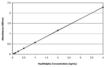
Highly sensitive detecting as little as 50 pg/ml of human HSP90α
-
Higher throughput format, test up to 40 samples in duplicate in just 3 hours
-
Fully quantitative results that surpass semi-quantitative Western blot analysis
The HSP90α (human), EIA kit is a colorimetric immunometric enzyme immunoassay kit with results in < 3 hours. Absorbance is read at 450 nm. Save time, money, and precious sample with fully quantitative results and increased sensitivity compared to Western blot analysis.
Please mouse over
Product Details
| Alternative Name: | Heat shock protein 90α, HSP86 |
| |
| Sensitivity: | 50 pg/ml (range 62.5 - 4,000 pg/ml) |
| |
| Assay Time: | <3 hours |
| |
| Applications: | ELISA, Colorimetric detection
|
| |
| Application Notes: | For the quantitative determination of HSP90α in cell lysates, serum, and tissue of human origin. |
| |
| Wavelength: | 450 nm |
| |
| Species reactivity: | Human
|
| |
| Crossreactivity: | HSP90α (100%). No reactivity with HSP90β, Grp94, HSP60, or HSP70 (HSP72). |
| |
| Use/Stability: | Store all components at 4°C, except standard at -20°C. |
| |
| Shipping: | Dry Ice |
| |
| Contents: | Microtiter plate, 5X Extraction reagent 2, Standard, Sample diluent, Wash buffer concentrate, HRP Conjugate, Conjugate diluent, TMB Substrate, Stop solution 2 |
| |
| Scientific Background: | The Hsp90 family of heat shock proteins represents one of the most abundantly expressed and highly conserved families of cellular chaperones whose expression can be upregulated under conditions of cellular stress, and includes cytoplasmic (Hsp90-alpha/beta), ER (grp94), and mitochondrial (TRAP1) localized members. Structurally, Hsp90 is characterized by an N-terminal ATP-binding domain, a medial substrate-binding domain, and a C-terminal dimerization motif. Hsp90 dimers function in cooperation with cochaperones (e.g. Hsp40, Hsp70, Hop, p23) to stabilize a multitude of client protein substrates, including steroid hormone receptors, protein kinases, and transcription factors. The essential binding and hydrolysis of ATP by Hsp90 is inhibited by ansamycin drugs (e.g. geldanamycin, 17-AAG) which occupy the N-terminal Hsp90 nucleotide-binding pocket. Many Hsp90 client proteins such as erbB2/Her-2, c-raf, bcr-abl, p53, and hTERT, are members of well characterized oncogenic pathways, making Hsp90 inhibitors useful anticancer agents. |
| |
| UniProt ID: | P07900 |
| |
| Regulatory Status: | RUO - Research Use Only |
| |
| Compatibility: | This product is compatible with the Absorbance 96 Plate Reader.
 |
| |
Product Literature References
Acute heat exposure protects against endothelial ischemia-reperfusion injury in aged humans: H.W. Hemingway, et al.; Am. J. Physiol. Regul. Integr. Comp. Physiol.
322, R360 (2022),
Abstract;
Shear stress induced by acute heat exposure is not obligatory to protect against endothelial ischemia-reperfusion injury in humans: H.W. Hemingway, et al.; J. Appl. Physiol.
132, 199 (2022),
Abstract;
Ameliorating cancer cachexia by inhibiting cancer cell release of Hsp70 and Hsp90 with omeprazole: Z. Liu, et al.; J. Cachexia Sarcopenia Muscle
13, 636 (2021),
Abstract;
Circulating heat shock protein 90 (Hsp90) and autoantibodies to Hsp90 are increased in patients with atopic dermatitis: K. Sitko, et al.; Cell Stress Chaperones
10, 12192 (2021),
Abstract;
Heat shock proteins (HSP 90, 70, 60, and 27) in Galleria mellonella (Lepidoptera) hemolymph are affected by infection with Conidiobolus coronatus (Entomophthorales): A.K. Wronska & M.I. Bogus; PLoS One
15, e0228556 (2020),
Abstract;
Full Text
Heat-shock protein 90α in plasma reflects severity of fatigue in patients with Crohn's disease: T. Grimstad, et al.; Innate Immun.
26, 146 (2020),
Abstract;
Full Text
Analysis of serum Hsp90 as a potential biomarker of β cell autoimmunity in type 1 diabetes: G.J. Ocaña, et al.; PLoS One
14, e0208456 (2019),
Application(s): Human serum,
Abstract;
Full Text
The oncolytic adenovirus VCN-01 promotes anti-tumor effect in primitive neuroectodermal tumor models: M. Garcia-Moure, et al.; Sci. Rep.
9, 14368 (2019),
Abstract;
Full Text
Comparison of targeted mass spectrometry techniques with an immunoassay: a case study for HSP90α: C. Güzel, et al.; Proteomics Clin. Appl.
12, (2018),
Application(s): HSP90a levels in human serum,
Abstract;
HSP27 is a partner of JAK2-STAT5 and a potential therapeutic target in myelofibrosis : M. Sevin, et al.; Nat. Commun.
9, 1431 (2018),
Application(s): HSP90a levels in human serum,
Abstract;
Full Text
Inflammatory stress of pancreatic beta cells drives release of extracellular heat-shock protein 90α: G.J. Ocaña, et al.; Immunology
151, 198 (2017),
Application(s): Exosomes from cytokine-stressed beta cells βLox5 and 1.1B4,
Abstract;
Full Text
Modulation of the inwardly rectifying potassium channel Kir4. 1 by the pro-invasive miR-5096 in glioblastoma cells : D. Thuringer, et al.; Oncotarget
8, 37681 (2017),
Application(s): HSP90a levels in culture supernatants,
Abstract;
Full Text
Modulation of the inwardly rectifying potassium channel Kir4.1 by the pro-invasive miR-5096 in glioblastoma cells: D. Thuringer, et al.; Oncotarget
8, 23 (2017),
Abstract;
Full Text
Heat shock protein 90α is a potential serological biomarker of acute rejection after renal transplantation: T. Maehana, et al.; PLoS One
11, e0162942 (2016),
Application(s): HSP90a levels in human serum,
Abstract;
Full Text
Proinsulin and heat shock protein 90 as biomarkers of beta-cell stress in the early period after onset of type 1 diabetes: R.A. Watkins, et al.; Transl. Res.
168, 96 (2016),
Application(s): HSP90 levels measured in serum samples,
Abstract;
Could the Anti-Chaperone VER155008 Replace Temozolomide for Glioma Treatment: L. Shervington, et al.; J. Cancer
6, 786 (2015),
Application(s): ELISA using human cell lysate,
Abstract;
Full Text
Effects of cytarabine on activation of human T cells - cytarabine has concentration-dependent effects that are modulated both by valproic acid and all-trans retinoic acid: E. Ersvaer, et al.; BMC Pharmacol. Toxicol.
16, 12 (2015),
Application(s): ELISA using human supernatant,
Abstract;
Full Text
Heat shock protein 90 associates with Toll-like receptors 7/9 and mediates self-nucleic acid recognition in SLE: K. Saito, et al.; Eur. J. Immunol.
45, 2028 (2015),
Application(s): HSP90a levels in human serum,
Abstract;
Full Text
Stimulation of the fibrillar collagen and heat shock proteins by nicotinamide or its derivatives in non-irradiated or UVA radiated fibroblasts, and direct anti-oxidant activity of nicotinamide derivatives: N. Philips, et al.; Cosmetics
2, 146 (2015),
Application(s): HSP90a levels in cell lysates,
Full Text
Early Response Roles for Prolactin Cortisol and Circulating and Cellular Levels of Heat Shock Proteins 72 and 90a in Severe Sepsis and SIRS: K. Vardas, et al.; BioMed Research International
2014, 803561 (2014),
Application(s): Human plasma HSP90α levels,
Abstract;
Full Text
Novel indicators of fibrosis-related complications in children with chronic kidney disease: K. Musial, et al.; Clin. Chim. Acta
430, 15 (2014),
Application(s): HSP90a levels in human serum,
Abstract;
The impact of dialysis modality on novel markers of stress reaction, matrix remodeling and endothelial damage in children on chronic dialysis: K. Musial, et al.; Blood Purif.
38, 7 (2014),
Application(s): HSP90a levels in human serum,
Abstract;
Secreted Hsp90 is a novel regulator of the epithelial to mesenchymal transition (EMT) in prostate cancer: M.W. Hance, et al.; J. Biol. Chem.
287, 37732 (2012),
Abstract;
Related Products